
Mother’s Meadow
Jones Brook running past our groundwater irrigation well. The thing sticking out of the top of the green well cover is the solar powered electric pump.
Who We Are

At Mother’s Meadow, we are passionate about cultivating more than just blueberries. We aim to foster community ties, create enduring memories, and instill a respect for our environment. With a commitment to sustainable farming, we provide our community with the freshest, locally grown pick your own blueberries. Each visit to our farm becomes a treasured experience, where every berry picked is a reflection of our dedication both to the land our environment and to our visitors. Join us as we savor nature’s generous bounty, cherishing each berry and every shared moment.

Kitt
Bossy boots

Cathy
Grandchild herder/recipe researcher/overthinker.

Jasminn
Creative director/ artist in residence/blueberry bush planter. Web wizard/game developer

Wayne
Equipment wizard/organizer/ irrigation expert/ canning expert.
Blueberry Varieties
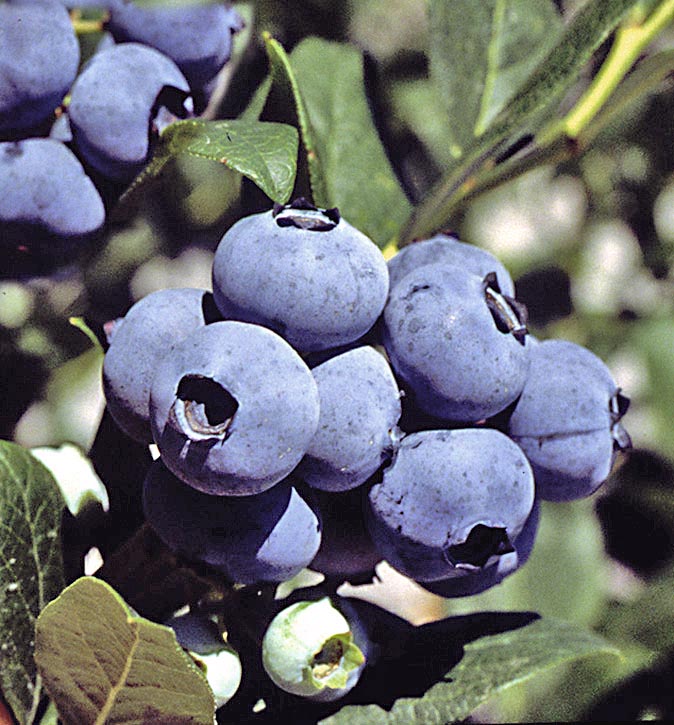
Chanti-cleer
Time Ripe: Early July
Chanticleer is a very early ripening variety. Fruit are medium sized, medium to light blue, with good scars, and good firmness. Flavor is sweet, sub-acid, and mild .
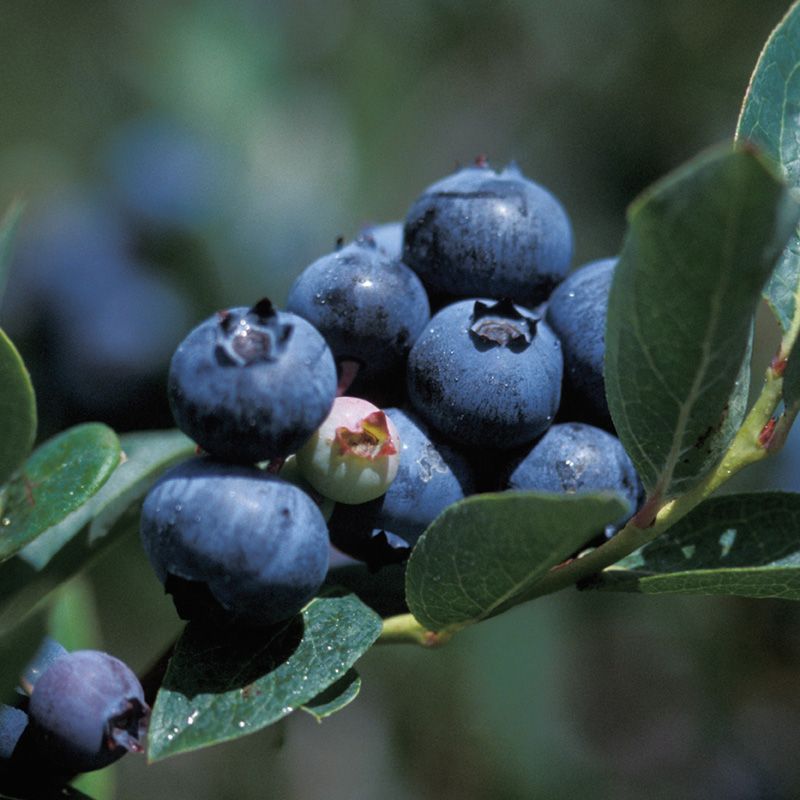
Duke
Time Ripe: Early July
An early variety. Fruit are large with a firm, crisp texture. Flavor is tangy, sweet, and delicate. Great source of antioxidants, and they are high in fiber and vitamin C.

Huron
Time Ripe: Mid-July
A new early ripening northern highbush cultivar introduced in 2009 from Michigan State University. These bushes are very productive of large, sweet, high quality berries that are known to store well.

Blueray
Time Ripe: Mid-July
An old favorite and heavy producer. Fruit are high quality with outstanding dessert flavor.

Toro
Time Ripe: Mid-July
The Toro is a wonderful variety. The fruit are large, juicy, and sweet, never tart. These delectable berries are perfect for fresh eating, baking, and cooking.

Bonus
Time Ripe: Late July/Early August
Bonus has very large sized fruit and consistent, high yields. The extra-large, juicy, bright blue berries are very sweet.
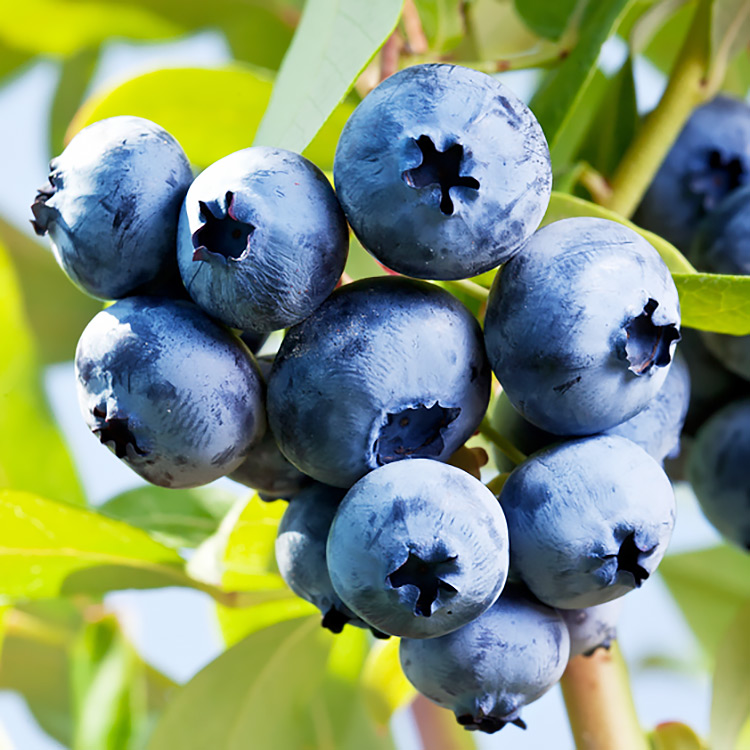
Chandler
Time Ripe: Mid-Late August
HUGE, high quality fruit. Chandler berries are often as large as a quarter and sometimes bigger. Excellent taste. With a long ripening season, Chandler can be picked regularly over 4-6 weeks.

Nelson
Time Ripe: Mid-Late August
This late-season blueberry variety is from the Michigan State breeding program. Nelson produces medium-blue, large sized, firm berries and the flavor is excellent.
We try to be Eco-Friendly

Solar-Drip Irrigation
Drip irrigation is a sustainable method of watering plants. Unlike traditional watering systems, drip irrigation targets the root zone of each plant, ensuring that water is delivered directly where it’s needed most. This not only conserves water but also reduces the evaporation and runoff that can be prevalent with overhead watering methods. We know that as water becomes an ever more precious resource, utilizing methods that reduce waste and promote efficiency is essential for our environment.
It All Starts With the Sun.
Our drip irrigation system is powered by the sun, the most renewable energy source available. Strategically placed solar panels on the farm capture sunlight and convert it into electricity. This not only reduces our carbon footprint but also ensures an inexpensive energy source to power our irrigation system.


The Panels Power the Pump.
Positioned in a well is a pump, designed to transport water to our crops. This pump, driven by the electricity generated with our panels, acts as the heart of our irrigation system, pumping water at a steady rate to ensure our blueberries get the hydration they need.
The Pump Distributes the Water.
Once the water is pumped from the well it is directed through a filtration system and a series of valves These regulate the distribution of water to the different irrigation zones. By managing the flow we can ensure that each plant gets the right amount of water without any waste.


Not a Drop Wasted.
Our system is not only about delivering water but doing so at the right time. With Bluetooth enabled valves, the water distribution program releases water in perfectly timed intervals. Strategically placed moisture sensors let the program know if soil moisture is correct. This means our blueberry plants receive water at the most optimal times, promoting their growth and reducing the possibility of over or under-watering. We can receive leak alerts or check status of the system on our phones.
Drip Irrigation in Action.
The finale of this well-orchestrated process is the actual drip irrigation pipes. Water is released from tubing placed near the base of our blueberry plants, dripping slowly to ensure maximum absorption by the roots. This method ensures that each plant gets the exact amount of water it requires, promoting healthy growth and reducing unnecessary water wastage and runoff pollution.

Pollinator Havens
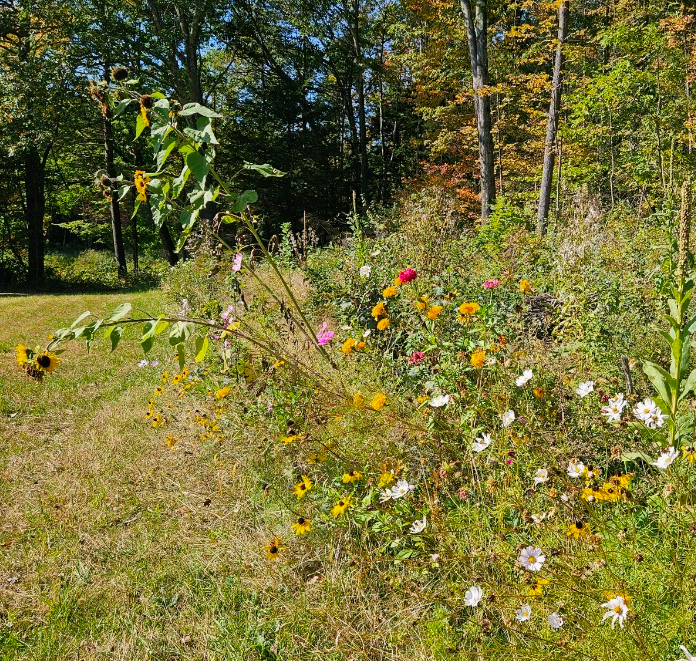
Our farm integrates several pollinator havens. These designated areas, filled with a diverse range of flowers, are crucial for attracting and supporting native pollinators, enhancing biodiversity, and fostering sustainable agricultural practices.
A Diversity of Flowers.
Our pollinator patches are a vibrant mix of various flowers:
- Sunflowers: They attract diverse pollinators, from bees to butterflies.
- Cosmos: With delicate petals in shades of pink and white, they beckon various beneficial insects.
- Marigolds: Beyond their stunning orange and yellow hues, they naturally deter pests, keeping harmful bugs at bay.
- Coneflowers (Echinacea): Native to many North American regions, these flowers are a favorite of bees and butterflies alike.
- We are adding several more of these patches near the blueberries as we have space.

Attracting Native Pollinators.
Pollinators, like bees, butterflies, and other beneficial insects, are the backbone of a thriving ecosystem. Drawn to our pollinator patches, they feed on the nectar and inadvertently assist in the transfer of pollen between plants. This not only boosts our blueberry yield but also fortifies the biodiversity of the entire Mothers Meadow Wetland region
Supporting the Local Ecosystem.
By integrating plants that are either native or highly beneficial to the Vermont environment, our patches resonate with the local ecological rhythm. These plants, well-adapted to the region’s conditions, lay the foundation for a resilient and balanced ecosystem.


Providing a Natural Defense against Pests.
Beyond their beauty, many flowers in our patches, like marigolds can provide a natural defense. They act as deterrents against certain pests, reducing the need for chemical interventions and helping our crops grow in a more natural environment.
Through the implementation of our solar-powered drip irrigation system and the establishment of our pollinator patches we have taken deliberate steps towards thoughtful farming. Both these initiatives reflect our commitment to sustainable agricultural practices and also our dedication to supporting and preserving the broader ecosystem of Brandon, Vermont. By prioritizing water conservation, promoting biodiversity, and harnessing renewable energy, we will continue to foster a harmonious relationship between our farm and the environment.
We use integrated pest management on our farm. Pests are anything that cause damage to something that is important to us. We monitor pests and only act when they reach damaging thresholds. We use appropriate pesticides at the minimum label rates. We ensure that the EPA label days to harvest windows are followed to ensure that any residues are within the EPA human safety limits. We and our families eat these berries also so this is important to us. If possible we will use OMRI listed materials (approved for organic production) As an aside organic does not mean not sprayed it just means that anything sprayed is OMRI listed.
 Mother's Meadow